
Trade In Deals On Cars At Lakewood, CO Dealers: How It Actually Works
Quick Summary
A trade-in value comes from the vehicle's year, mileage, condition, history and current local demand, minus what it will cost to recondition and resell it. Your loan payoff is subtracted from that figure, so positive equity lowers the price of your next vehicle while negative equity gets added to it. In Colorado, the fair market value of a registered trade-in is left out of the taxable purchase price, which is a real saving over selling privately. Bringing the title or lender details, every key and your service records speeds things up, and AutoTrek in Littleton handles the payoff call and paperwork for Lakewood drivers.
A lot of the Lakewood people who come see us have already typed their car into a website, and when our number comes back different they kind of want to know why. So here's how trade in deals for cars actually get put together, because it's really three things at once: what the car's worth to us, what you still owe on it, and what the trade does to the tax on the next one.
We're AutoTrek, down on Southpark Circle in Littleton, and for most of Lakewood that's just a quick run down Wadsworth or C-470, and our appraisers look at trades pretty much every day, so we'll walk you through one.
How We Figure Out What Your Trade Is Worth
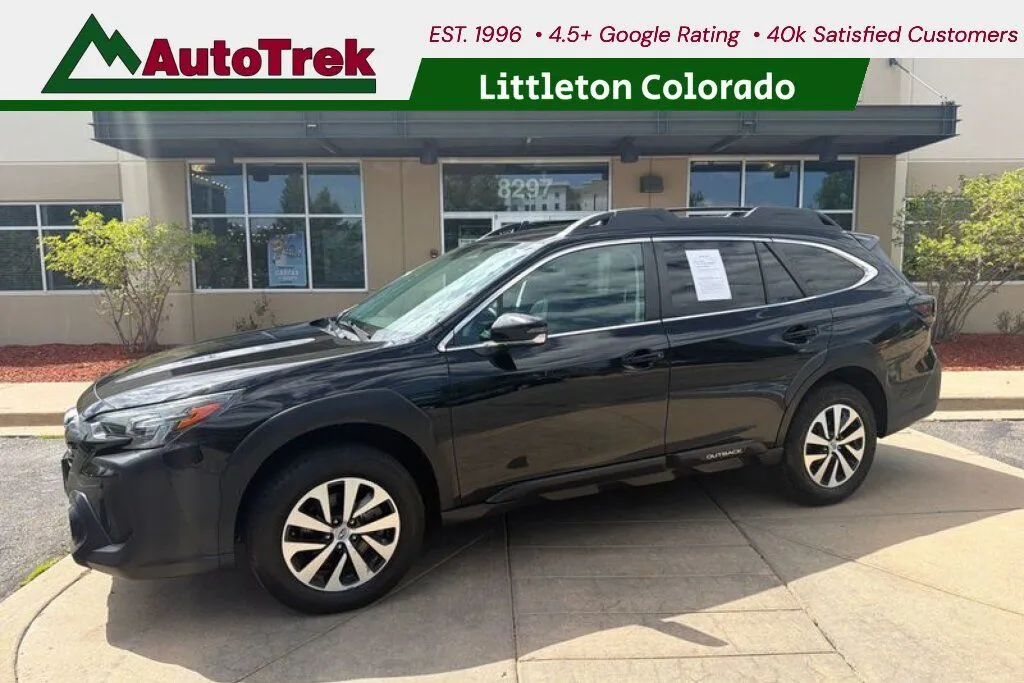
It starts with the basics, year, make, model, trim, drivetrain and miles, and honestly the miles alone can swing it a lot, like a 2018 Subaru Outback at 70,000 miles with a clean history is just not the same car as one at 140,000 with two accidents on the report.
What The Appraiser Looks At
Somebody walks around the car and usually drives it around the block, checking tire tread and how the brakes feel, chips in the windshield, warning lights on the dash, how beat up the inside is, whether it shifts and idles right, and since this is Colorado, whether a June hailstorm got to the hood.
Anything that turns up gets a dollar amount, since we pay to fix it before we sell it, so worn tires might be a few hundred dollars and a cracked windshield or a timing belt that's overdue is more than that, and that pretty much comes right off the number.
Demand, History And Those Online Numbers
The part people don't see is demand, and we get at that by looking at what similar cars have sold for lately, wholesale and retail, plus the history report for accidents, title brands and how many owners it's had.
Around the Denver area the weather and the mountains drive a lot of that, so AWD SUVs and 4x4 pickups hold their value really well here, and a clean one in October gets a lot more attention than a rear-wheel-drive sports sedan does.
The online estimate is a fair range, but it depends on how you rated the condition, and most of us click excellent when good is probably closer, so we look at it as a place to start the conversation and not a promise.
If you want something a little firmer before you leave the house, our trade-in value tool will give you a cash value off the details you put in.
Loan Payoff And Equity, Good Or Bad
So the appraisal's only half of it. If there's still a loan on the car the lender gets paid before the title can change hands, and whatever's left over between those two numbers is your equity.
Say we appraise your SUV at $14,000 and the payoff is $9,000, you've got $5,000 in positive equity, and that works a lot like a down payment, it just lowers what you end up financing on the next car.
It can go the other way too, that's negative equity, so if it's worth $14,000 and you owe $17,000 there's $3,000 that has to go somewhere, either you pay it in cash or it gets added onto the new loan.
Rolling it into the new loan happens a lot, but you're starting out owing more than the car's worth, and the FTC explains the risks of negative equity, and we'd rather show you those numbers up front than hide them in a payment.
Last month's statement is already out of date by the time you're sitting with us since interest adds up daily, so ask your lender for a 10-day payoff quote, or just bring your account number and our team will call and get it.
Colorado's Sales Tax Break On Trade-Ins
This is the part that surprises people: when you trade a car in as part of buying another one, Colorado leaves the trade's fair market value out of the taxable price, as long as it's a vehicle that has to be registered, and the Colorado Department of Revenue spells out the details in its motor vehicle guidance.
So if you buy a $22,000 SUV and trade in a car worth $8,000, you're only paying sales tax on $14,000, and with state and local rates stacked together around the metro that's real money.
Is Selling It Yourself Worth It
A private sale can get you more for the car sometimes, but you lose that tax break, and you're dealing with the listing, the texts at 10 at night asking if it's still available, test drives with people you don't know and doing the title yourself, so once you count the tax, the gap to a fair trade is a lot of times smaller than it looked.
Not ready to buy yet? That's fine, you can still sell your car to AutoTrek and you don't have to buy from us.
What To Bring And How To Get The Car Ready
If the car's paid off, bring the title, but don't sign it until we show you where, otherwise the paperwork might have to get redone.
If a lender has the title, just bring the lender's name and your loan account number, plus current registration, proof of insurance and a valid driver's license for everybody who's on the title.
Bring every key and fob too, a new smart key can cost a few hundred dollars, so a missing spare usually turns into a deduction.
Skip the full detail, but a quick vacuum, wiping off the dash and emptying the trunk lets the appraiser see the car and not ski boots, car seats and a whole winter of mag chloride on the floor mats.
Dig out your service records if you have them, especially timing belt, brakes, tires and transmission fluid, since a folder of receipts shows somebody took care of it and can bump the number up a little.
Big repairs right before you trade usually aren't worth it, since you probably won't get the whole bill back, but cheap fixes like a burned-out bulb or a missing gas cap, sure, go ahead and do that.
It helps to know what payment you're comfortable with before shopping, and if you plug your expected equity into our car loan calculator you can see what the trade does to the monthly number.
Trade In And Drive Home With AutoTrek
Everything on our lot has a no-haggle, one-price guarantee, so the trade value and the price of the car get laid out plainly, and the car you pick comes with a free CARFAX report, our best-in-class inspection, and a 3-day return policy plus a 3-month/3,000-mile warranty.
More than 20 Colorado credit unions use us as their preferred auto-buying service, and we can set up auto financing and pre-approval at the same time as your trade.
Take a look at our used cars, trucks and SUVs for sale in Littleton, CO, get your trade value online and come by whenever, and we'll take care of the payoff call and the paperwork.
Frequently Asked Questions
Can I trade in a car I still owe money on?
Does Colorado give a sales tax credit for trade-ins?
Is it better to trade in or sell privately?
What lowers a trade-in value the most?