
What To Look For In A Used Subaru: A Buyer's Guide
Quick Summary
Before you buy any used Subaru, start with the five checks that matter most: the CARFAX history, the service records, the tread on all four tires, the underbody for de-icer rust, and the all-wheel-drive system for whine or binding on a test drive. The thing that decides it is the service history, not the odometer, because a high-mileage Outback with documented oil and CVT fluid service is usually a safer buy than a low-mileage car with no records at all. Older EJ-engine models also need proof of head-gasket work, and any car you settle on deserves a written pre-purchase inspection, with the warranty and financing terms on paper before you sign.
If you drive around the Denver metro in winter, you already know why a used Subaru is on your list. Nearly every model has all-wheel drive, the Outback, Forester and Crosstrek sit high enough to clear a snowy driveway, and the brand has a reputation for lasting. The good news is that you can spot most of the difference between a well-kept Subaru and a tired one in the paperwork and a short, careful look, and you don't need mechanic's training to do it. These checks work for any used Subaru from any seller. They finish with the financing and warranty questions to ask before you sign anything.

Seven Checks That Separate a Well-Kept Subaru From a Tired One
Seven checks catch most of the problems buyers worry about, and you can do the first two before you even see the car:
- Vehicle history report. Look at the title status, any reported accidents or damage, the number of owners and whether the odometer readings rise steadily from one record to the next.
- Maintenance records. Expect to see regular oil changes and the model-specific service covered further down. A folder of receipts is worth more than a seller's memory.
- Tire wear. All four tires should match in brand and size and have similar tread depth. A Subaru's AWD system relies on equal tire diameters.
- Underbody and rust. The de-icers used on Colorado roads build up on brake lines, subframes, exhaust hangers and rocker panels. Check behind the rear wheels and along the sills.
- AWD behavior on a test drive. Make slow, tight turns in a parking lot and listen for binding or clunking. Then listen for a whine at highway speed.
- Dashboard warning lights. Every light should come on at start-up and then go out. A check-engine, AWD or EyeSight warning that stays on needs an explanation.
- Interior electronics. Test the infotainment screen, backup camera, heater, A/C, heated seats and every window switch.
AutoTrek gives you a free CARFAX report on its used vehicles. That report answers the questions that make buyers most nervous: whether the car has a reported accident, whether the title is clean and whether the mileage history makes sense. What it can't show you is how the car was driven, or whether its fluids were changed at a shop that doesn't report to anyone. That's why the service records below matter so much.
Why Used Subarus Hold Their Value
Two pieces of engineering explain most of the demand. Symmetrical all-wheel drive sends power to all four wheels through a drivetrain laid out evenly along the car's centerline. The horizontally opposed boxer engine sits low in the chassis, which keeps the center of gravity down. On an icy morning on C-470 or a snowy climb toward Evergreen, that drivetrain is what a Colorado driver is paying for. It's also why a used Subaru Outback, Forester or Crosstrek stays in demand long after it leaves the showroom.
Strong resale value cuts both ways. A used Subaru SUV will often cost more than a sedan of the same age, and it will usually be worth more when you trade it in. If you're weighing Subaru against other dependable makes, our rundown of the most reliable used car brands compares them directly. Outback and Forester shoppers comparing crossovers can also check our list of the best used SUVs under $30,000.
AutoTrek's used inventory includes a range of price points to fit different budgets, from entry-level options to higher-end trims. In the lower end of that range, a used Subaru will usually be an older model year or have higher mileage. That makes its records worth reading more closely, not a reason to rule it out.
Mileage, Age, and What They Really Tell You About a Used Subaru
An odometer tells you how far a car has gone, not how well it was looked after. A Forester with high mileage and a thick stack of receipts has shown you how it was treated. A low-mileage one with no history has only asked you to trust it. When the two are close in price, the documented car is usually the safer bet.
A complete maintenance log for a used Subaru should show oil changes at steady intervals, a timing belt replacement on engines that use a belt, CVT fluid service on later models where the schedule calls for it, and the routine work on brake fluid, coolant and differential fluid. Check the dates and mileage on each entry against the maintenance schedule for that model year, since intervals vary from one generation to the next.
A few patterns are worth questioning. Long gaps between services, mileage that jumps more between visits than the time gap explains, missing years, and a fresh oil change with nothing before it all deserve a straight answer. Sometimes the answer is harmless, like a car that sat in a garage for a year, but you should hear it before you buy, not after.
Outback, Forester, Crosstrek and Impreza: Model-by-Model Service Checks
Older Outback, Forester and Impreza models with the EJ-series engine have a well-known history of head-gasket leaks. Ask whether the gaskets have been replaced and look for the receipt. During the inspection, an oily film or a sweet coolant smell along the lower edges of the engine deserves a closer look. These engines also use a timing belt, so confirm it was changed when the schedule called for it.
Later Outback, Forester and Crosstrek models use a continuously variable transmission (CVT). Ask whether the CVT fluid was inspected or changed when that car's schedule called for it. A car that spent years climbing I-70 to the ski areas works its transmission harder than a flat-ground commuter, so the records matter even more. On the test drive, a healthy CVT feels seamless. Shuddering from a stop or a droning whine under load points to wear.
On a used Subaru Crosstrek or Impreza, look closely at the tires. Because the AWD system wants all four tires the same size, uneven wear or one new tire next to three worn ones can mean the drivetrain has been under strain, or that the alignment or suspension needs work. Ask why the tires were replaced, and whether all four were changed together.
Inspection Day: What a Thorough Pre-Purchase Check Looks Like
A good pre-purchase inspection ends with a written report. The technician should put the car on a lift and check the underbody, brakes, suspension, CV boots and exhaust. Fluid levels and condition get checked too, along with any oil and coolant seeps around the engine and a scan for stored trouble codes, including ones that no longer show on the dash. A road test comes last. The written work order lists what's fine, what needs attention soon and roughly what that will cost.
That document is what prevents surprises in the weeks after the sale, and buyers notice when it's done well: C., in a 5-star review, called AutoTrek's pre-purchase inspection and work order "very detailed and an added bonus when buying a used car."
Even with a thorough report in hand, it's reasonable to ask for a second opinion from a mechanic you choose. The FTC's Buyers Guide, the sticker every dealer must post in a used car's window, itself tells buyers they can ask to have the car inspected by an independent mechanic before they buy. A seller who's happy to let that happen expects the car to pass.
The AutoTrek Service Center at 8161 S Grant Way in Littleton handles vehicle service and auto repair. Its technicians explain what a car needs before any work begins. It's open Monday through Friday, 9 a.m. to 5 p.m., so a weekday lunch break is a practical time to bring in a Subaru you're considering.
Financing a Used Subaru: Credit Unions, Warranties, and Fair Pricing
AutoTrek works with buyers in every credit situation, including first-time buyers and people rebuilding their credit. Approval and terms always depend on the lender's review of your application, and knowing that up front keeps the process honest.
AutoTrek is the preferred auto-buying service for more than 20 Colorado credit unions. Members can often finance through a credit union they already belong to, and working with several credit unions means more than one offer to compare. That's how it worked for Ben, who wrote in a 5-star review: "Because they work with several credit unions, we found a great interest rate and loan term." Online credit pre-approval takes a few minutes and saves time at the dealership. Knowing your budget before you shop keeps the conversation on the car.
Every vehicle has one posted price with no haggling. If you're on a budget and comparing a used Subaru with other options at the same price, our list of the best used cars under $20,000 is a useful cross-check.
Here are the protections in plain terms. AutoTrek backs its used vehicles with a 3-day return policy and a 3-month/3,000-mile warranty. You get the full terms in writing, including what's covered, what's excluded and the conditions for a return, and you should read them before you sign. The Buyers Guide in the window states whether the car comes with a warranty or is sold as is. Make sure it matches what you were told.
A Family-Owned Littleton Lot, Plus a Broker for the Subaru It Doesn't Have
AutoTrek is a family-owned business that has served Littleton since 1996, along with buyers from Highlands Ranch, Englewood, Denver and Lakewood. It holds an A+ rating with the Better Business Bureau and has served more than 40,000 customers. AutoTrek also has a sales dealership in Littleton, where its used inventory is on display.
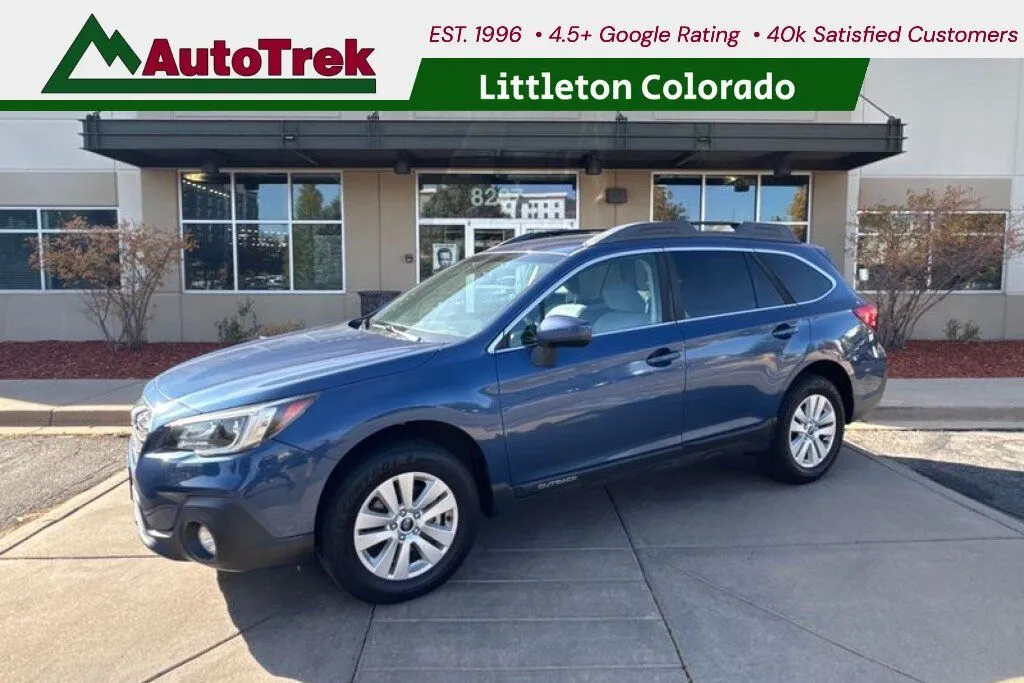
If the right Subaru isn't on the lot, AutoTrek's brokerage service will look for it, whether that's a particular Crosstrek trim, an Outback with the six-cylinder engine or a Forester within a set budget. To see the kind of well-documented car described above, look at the used 2017 Subaru Outback 3.6R Touring AutoTrek has listed in Littleton.
When the records check out and the terms are clear, buying the car should feel easy, not tense. Rafael, who financed a 2015 Subaru Forester, wrote in a 5-star review that going through the financing and driving it off the lot "honestly felt like I was stealing the car." After the sale, the AutoTrek Service Center handles the oil changes, brake service and alignments that keep a Subaru on its maintenance schedule.
Book a pre-purchase inspection with the AutoTrek Service Center before you commit to your next used Subaru.
Financing is subject to credit approval by the lender, and rates and terms vary by applicant. Warranty and return-policy terms, coverage and conditions are provided in writing at the time of sale. Review them, along with the vehicle's Buyers Guide, before signing.